How Backyard Gardening Works for Beginners?

Beginners achieve reliable results in backyard gardening when you focus on soil health, plant selection, sunlight and watering needs, pest management, and seasonal timing; start small with containers or a raised bed, test and amend your soil, pick varieties suited to your climate, and maintain consistent care to grow productive, low-maintenance gardens.
Benefits of Backyard Gardening

While backyard gardening gives you fresh, affordable produce and saves money, it also strengthens your connection to nature, teaches practical skills, improves seasonal awareness, and delivers lasting satisfaction as you watch your efforts yield tangible results.
Health Benefits
After you begin gardening, you gain regular low-impact exercise, reduced stress, and improved mood; growing your own food boosts nutrient intake, encourages mindful routines, and supports better sleep and overall mental resilience.
Environmental Impact
Behind your garden, you cut food miles, create habitat for pollinators, and foster biodiversity; composting and choosing native plants improve soil health and reduce dependence on synthetic inputs, benefiting local ecosystems.
Also, by selecting drought-tolerant species, mulching, and harvesting rainwater, you conserve water and reduce runoff; avoiding chemical pesticides and fertilizers lowers pollution while healthier soil in your garden increases carbon storage and ecosystem resilience.
Getting Started with Backyard Gardening
It begins with planning your space, assessing sunlight and water access, testing your soil, and setting simple goals; start small, choose easy plants, schedule weekly care, and track what works so you improve your garden each season.
Choosing the Right Location
The best spot gives your plants 6-8 hours of sun, good drainage, easy access to water and shelter from strong wind; place beds near your kitchen for convenience, avoid low frost pockets, and check soil quality before committing to a site.
Understanding Soil Types
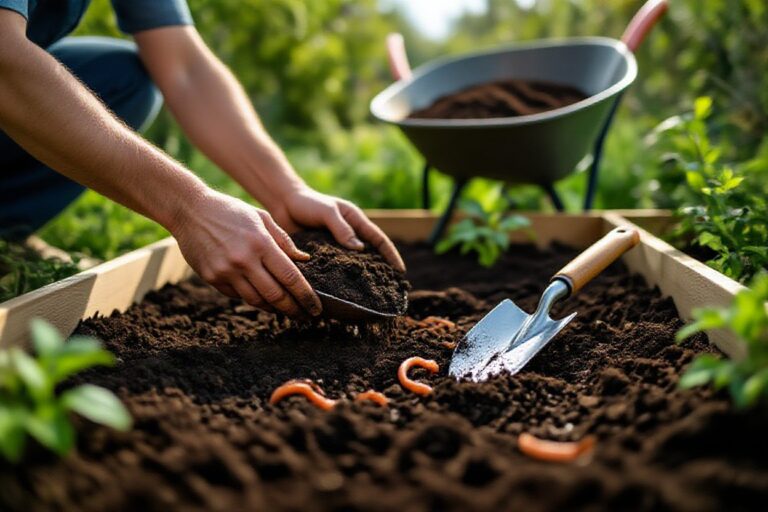
Started by testing your soil to learn texture, pH and organic content; sandy soils drain fast, clay holds water, loam balances both-amend with compost, sand or gypsum and select plants suited to your mix. Knowing how to amend soil lets you choose and care for the right plants.
- Test your soil pH and texture
- Add compost to boost fertility
- Improve drainage with raised beds or sand
- Use mulch to conserve moisture
- Rotate crops to maintain soil health
| Sandy | Fast drainage; add organic matter to retain moisture for your plants. |
| Clay | Holds water; add gypsum and compost to improve structure for your roots. |
| Silt | Fertile but prone to compaction; add compost and avoid working when wet. |
| Loam | Balanced texture; choose diverse crops to make the most of your soil. |
| Peaty | High organic matter; manage acidity and ensure good drainage for seedlings. |
At the next level, you observe water behavior after rain, probe for compaction, and encourage biological activity with layered compost, cover crops and minimal tilling to build resilient soil. Knowing which amendments and practices suit your garden accelerates improvement and supports stronger plants.
- Perform a percolation test to check drainage
- Use a soil probe to detect compaction
- Grow cover crops to add organic matter
- Apply layered compost annually
- Minimize tilling to protect soil life
| Drainage | Slow drainage – raise beds and add organic matter to help your roots. |
| Compaction | Hard to probe – aerate and use deep-rooted cover crops to loosen soil for your plants. |
| pH | Acidic or alkaline – amend to match the vegetables or flowers you want to grow. |
| Organic matter | Low levels – add compost and mulches to feed soil life for your crops. |
| Structure | Crumbly is ideal; if not, add compost and avoid working the soil when wet. |
Selecting Plants for Your Garden
Assuming you assess your climate, soil type and available light first, choose plants suited to those conditions; select varieties labeled for your hardiness zone, favor disease-resistant cultivars, and start with a few manageable species so you can learn your garden’s rhythms before expanding.
Vegetables vs. Flowers
By deciding whether you want food, color, or both, you can prioritize vegetables for harvest and flowers for pollinators and ornament; consider season length, maintenance needs and space, and mix edibles and ornamentals where they complement each other’s growth and pest control in your beds.
Companion Planting
With companion planting you pair compatible species to deter pests, attract beneficial insects and improve soil health; try basil near tomatoes for flavor and pest reduction, or marigolds to help suppress nematodes, and observe how combinations perform in your microclimate.
At a practical level, map your beds to rotate plant families, avoid repeating heavy feeders in the same spot, and include nitrogen-fixers like beans near leafy greens; keep notes on spacing, timing and outcomes so you can refine companion choices for better yields and resilience in your garden.
Essential Gardening Tools
For your backyard garden to thrive, choose reliable, ergonomic tools that simplify planting, watering, soil care, and basic maintenance so you can work efficiently and protect your hands and back.
Basic Tools for Beginners
Along your first weeks, equip yourself with a hand trowel, pruning shears, gloves, a watering can or hose with nozzle, a spade or digging fork, and a lightweight rake so you can prepare beds, plant seedlings, prune, and water with confidence.
Advanced Tools for Growth
To scale your efforts, add tools that save time and improve results-soil moisture meters, drip irrigation kits, compost tumblers, and a compact tiller help you monitor conditions, conserve water, speed composting, and reduce manual labor.
- Soil moisture meter
- Drip irrigation kit
- Compost tumbler
- Compact tiller
Tools and Uses
| Tool | Use |
|---|---|
| Soil moisture meter | Helps you check soil moisture so you water only when needed |
| Drip irrigation kit | Allows you to deliver consistent water directly to roots, conserving water |
| Compost tumbler | Lets you speed composting so you produce nutrient-rich soil amendments |
| Compact tiller | Reduces manual digging so you can prepare beds faster |
Beginners should match advanced purchases to your garden size and budget, add one tool at a time, and learn safe operation and basic maintenance so each tool serves you longer and improves your results.
- Start small and upgrade gradually
- Learn safety and maintenance
- Choose multiuse tools to save space and money
Tools and Uses
| Tool | Use |
|---|---|
| Multiuse power tool | Gives you flexibility for tilling, edging, or trimming in tight spaces |
| Automatic timer for irrigation | Helps you automate watering so your schedule stays consistent |
| pH and nutrient test kit | Lets you assess soil health so you can amend for better yields |
Maintenance and Care

To keep your backyard productive and healthy, set a weekly routine for weeding, pruning, feeding, and inspecting plants; adjust tasks by season, track watering and soil conditions, and use stakes or supports where needed so your plants develop strong structure and consistent yields.
Watering Techniques
Techniques that work include deep, infrequent watering to encourage roots to grow downward, watering in the morning to reduce disease risk, using drip lines or soaker hoses for efficiency, and applying mulch to retain moisture so you water less often and more effectively.
Pest Control Strategies
Watering practices affect pest pressure, so you should avoid overwatering that attracts slugs and fungus; inspect leaves weekly, remove affected foliage, encourage beneficial insects with diverse plantings, and use targeted traps or organic sprays when necessary to protect yields.
Control methods should prioritize prevention: maintain clean beds, rotate crops annually, monitor with sticky cards, introduce predatory insects, and apply narrow-spectrum biological or botanical treatments so you minimize harm to pollinators and sustain long-term garden balance.
Seasonal Considerations
All seasons demand adjustments to planting, watering and protection; you should match crops to local frost dates, test soil warmth before sowing, mulch to conserve moisture in summer and use row covers or cold frames to extend the growing season and shield plants from late frosts.
Planning for Different Seasons
Beside planning sowing dates, you should create a seasonal calendar that outlines seed starting, transplanting and harvest windows, adjust irrigation and shade during heat or wet periods, and choose varieties suited to your winter lows and summer highs.
Crop Rotation Basics
Rotation of crop families in each bed breaks pest cycles, balances nutrient use and improves soil structure; you should map plant families, avoid repeating heavy feeders, and follow legumes with nitrogen-hungry crops to restore fertility.
Further, aim for a three- to four-year rotation when possible: group crops into legumes, leafy greens, roots and fruiting vegetables, use cover crops to rebuild organic matter, and keep a simple log so you can track placements and plan effective future rotations.
Conclusion
So you can build a productive backyard garden by beginning small, choosing plants suited to your climate, preparing soil and containers, providing consistent water and light, and practicing simple pest and nutrient management; observe your results, adjust your techniques, and expand gradually as your skills and confidence grow.